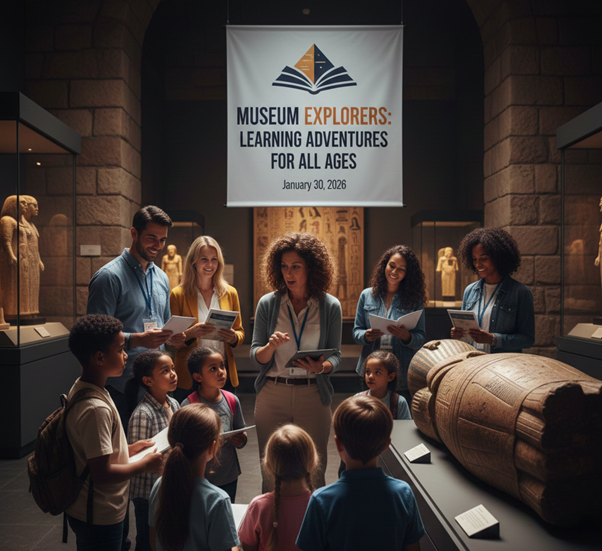
Museums play an important role in supporting learning beyond the classroom. They offer students and educators opportunities to explore history, art, science, and culture through real objects and experiences. By engaging with exhibits and collections, learners can connect academic concepts to the real world in meaningful ways that deepen understanding and curiosity.
Museum collections are powerful tools for teaching critical thinking. When students analyze artifacts, artworks, or historical objects, they are encouraged to observe closely, ask questions, and consider different perspectives. This process helps learners develop skills such as analysis, interpretation, and problem-solving that are valuable across all subject areas.
Museum education programs are designed to engage learners of all ages, from young children to adults. These programs often include guided tours, hands-on activities, workshops, and interactive discussions that support different learning styles. By creating inclusive and engaging experiences, museums help make learning accessible, enjoyable, and relevant for diverse audiences.
In addition to education, museums play a vital role in preserving culture and history. They protect and interpret important artifacts and stories, ensuring that future generations can learn from the past. Through educational programming, museums help learners understand cultural heritage while encouraging respect, awareness, and global understanding.
Technology has also expanded the reach of museum education through virtual tours and online resources. Virtual museum experiences make learning accessible to students who may not be able to visit in person. These digital tools allow learners to explore collections, participate in guided lessons, and engage with content from anywhere, supporting flexible and inclusive education.
Museum educators bring history and art to life by connecting objects to stories, people, and real world experiences. Their expertise helps transform exhibits into meaningful learning opportunities that inspire curiosity and engagement. Many educators also use museums as inspiration for project-based learning, encouraging students to research, create, and present projects based on museum themes and collections.
Overall, museum education supports lifelong learning by blending exploration, critical thinking, and creativity. Whether through in-person visits, virtual experiences, or classroom projects inspired by museums, these educational spaces continue to enrich teaching and learning in powerful ways.